
SEO, ads & store strategy, working off the same growth plan.
Trusted by brands in education, fintech, real estate & ecommerce
We don’t measure success in traffic or impressions. Every engagement is judged by the same thing your store is, revenue.
Across Google, Meta & other ad platforms, tracked back to revenue, not reach.
From D2C startups to enterprise-scale ecommerce brands, across categories.
Most agencies chase new logos. Our clients tend to stay.
From marketplace listings to your own website, we connect SEO, ads and store management so every channel pulls in the same direction instead of competing for the same budget.
Let’s find out where you’re losing sales before we decide where to spend.
Find Out Through Our Successful Projects
Ran Meta Ads targeting women within a 5 km radius of the store, rotated a new offer every week to keep the feed fresh, and set every CTA to drop the user directly into WhatsApp rather than a landing page.
Vardhaman Beauty Shop
The core challenge wasn’t to fetch leads from parents, but to get parents to pay for the demo/trial class. That too, for a startup. Only 2 edtech giants did this; no one else. We still succeeded to main a health CPL.
SISYA
Class
After 3 months of rising CPLs, we overhauled the account by adding pixel-based lookalikes, full remarketing, and objection-handling PAS creatives. Within 15 days, CPL dropped 26%. We fixed the funnel, not the budget.
IMS
Proschool
This is not a sales call. It’s a structured conversation where we understand your business – what’s worked, what hasn’t, what’s on the table, and what keeps you up at night. We come prepared with questions. You leave with clarity.
We go through everything – your ad accounts, SEO data, social media channels, ecommerce performance, CRM data and competitive landscape. Not surface-level. Not automated. Our team reviews your actual numbers so we know exactly what we’re working with before we say a word about strategy.
No copy-paste frameworks. No industry templates. Based on the audit, we build a strategy specific to your brand, your audience, and your goals. Two clients won’t get the same plan, because they’re not the same business.
We get on a call and present the full strategy, the reasoning behind every recommendation, the channels we’ve chosen, the ones we’ve ruled out, and the plan to hit your goals. You get to ask every possible question.
Once aligned, execution begins. Setup, tracking, timelines, and a clear point of contact, all in place from day one. No ambiguity about who owns what
A name like Manipal University already gets searched for directly, so the job is being found, not introduced.
A growing network like ITM Group is still earning that same recognition, so the job starts a step earlier. Two institutions, two different starting lines, the same finish line.
Course discovery in edtech moves fast across search, ads, and YouTube at once, and most brands just need to run all three well.
Every so often, the real problem is upstream: leads going in and quietly disappearing before anyone notices.
We’ve learned to check the pipe before reaching for more spend.
A trading platform earns belief through long, patient explanation, which is why video does more work than any ad in that category.
A personal finance brand answers a quieter, more searching kind of question, which is why a place like Quora matters as much as a search ranking. Same industry, different nervous systems.
Amazon rewards different signals than Flipkart, and both reward different signals than your own website, so scaling all three at once means refusing to treat them as one channel.
Sometimes the real starting point is even earlier than that: a website that’s actually built to convert in the first place.
In a small, expensive micro-market, every rupee of media has to land with precision; that part is its own discipline.
But the bigger lesson real estate has taught us is that reputation often outweighs the media plan, and it has to work twice: once for the people buying, once for the people you’re trying to hire.
An AI-run news site can publish at a volume no human team could match, and that exact strength is what triggered a Google penalty severe enough to erase its visibility overnight.
Recovering meant understanding the automation well enough to rebuild trust in it, not just patch the symptoms.
We are the agency built for serious brands and measurable results.
A modern problem-solving agency built for brands that demand more, where strategy, creativity, and results converge.
Not just marketers – your extended
growth team.
Creative
Bold
Revenue-Driven
Strategy-First
It is, but not the way most people run it.
Margins get eaten by ad spend, marketplace commissions and returns, so profit shows up when you control CAC, repeat purchase rate and AOV together.
Brands that only chase revenue growth without watching these three numbers tend to look busy and broke at the same time.
Big brands win on budget. They rarely win on speed, niche targeting or product storytelling, which is where smaller brands actually have the edge.
We’ve seen newer stores outsell category leaders on specific keywords and audiences simply because the bigger brand never bothered to compete there.
Marketplaces get you discovered.
They don’t let you own the customer relationship, the data, or the margin, since the platform controls pricing pressure, ad placement and even your access to buyer information.
A website is where repeat customers come back to you directly, without paying the marketplace a cut every time.
Listing a product isn’t the same as it being seen.
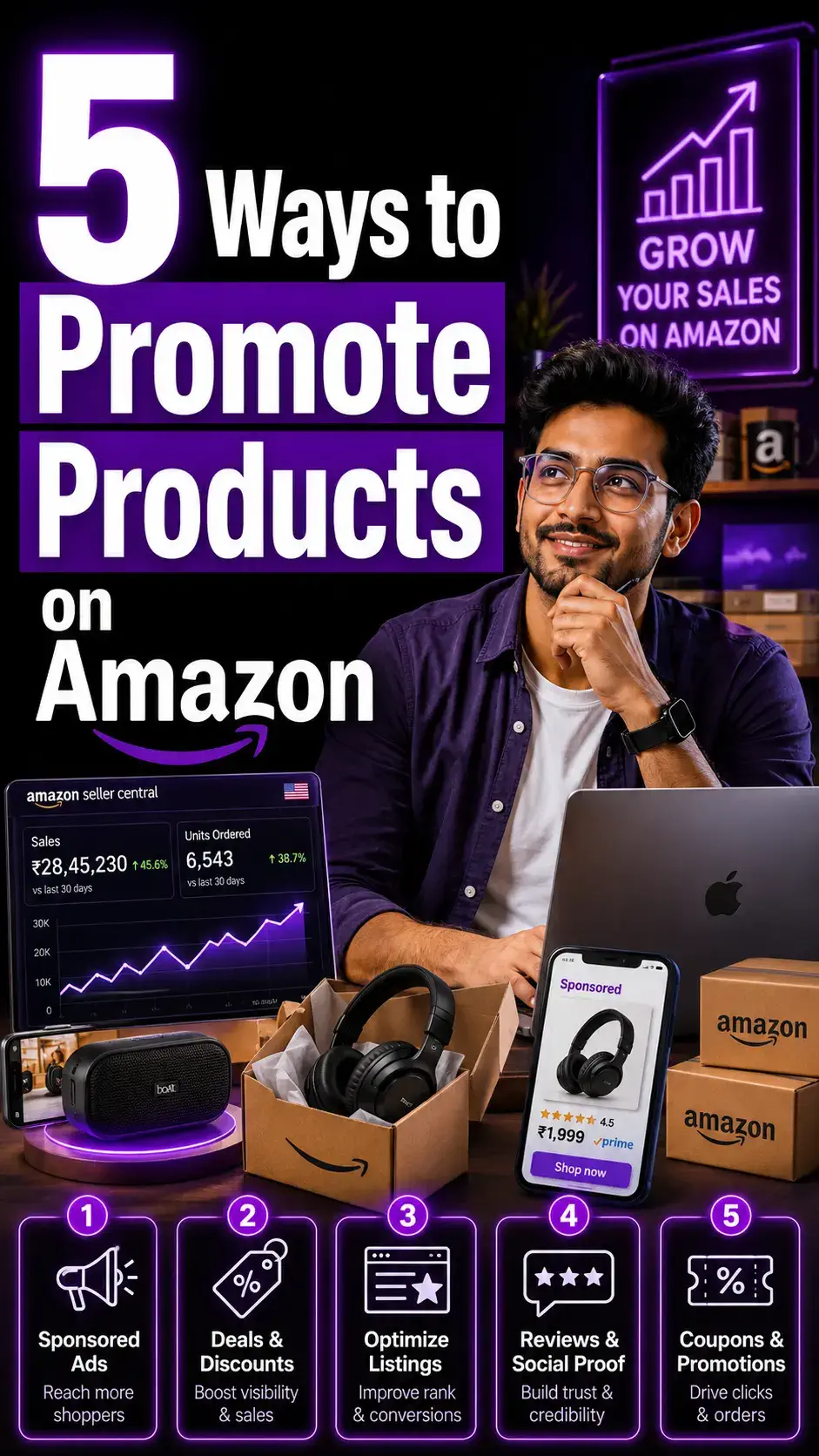
Amazon and Flipkart run their own internal ad auctions, and competitors are bidding for the exact same search terms your product needs to show up on.
Without sponsored placements and review velocity, most listings sit buried past page two.
It might not outsell them in month one.
But a D2C site keeps 100% of the margin, builds an email and WhatsApp list you actually own, and isn’t at the mercy of a platform’s commission hikes or policy changes.
Several brands we’ve worked with now run 30-40% of total revenue through their own site within a year.
Marketplace algorithms reward what’s already performing, which means new listings start at a disadvantage regardless of product quality.
Rankings move on sales velocity, reviews and click-through rate, all of which need a deliberate push in the first few weeks before the algorithm has any reason to favor you.
They do different jobs. Google captures people already searching with intent, and Meta creates that intent in the first place through discovery.
Running only one usually means you’re either missing the demand that already exists or failing to generate new demand at all.
Spend and sales move together until they don’t, and every account has a ceiling where cost per acquisition starts climbing faster than revenue.
Past that point, more budget just buys more expensive customers. The fix is almost never a bigger budget, it’s a better funnel underneath it.
ROAS ignores product cost, shipping, returns and marketplace fees, so a “5x ROAS” campaign can still lose money once the real cost of goods is factored in.
We look at contribution margin per order, not just what the ads dashboard reports back.
Most shoppers don’t buy on the first visit regardless of price, since they’re comparing, checking reviews, or just distracted.
Retargeting isn’t there to convince someone the product is good, it’s there to bring back people who already decided it was.
Poorly frequency-capped retargeting annoys people.
Well-managed retargeting, with capped impressions and fresh creative every couple of weeks, is one of the highest ROAS channels in most ecommerce accounts, because you’re spending to convert interest that already exists instead of creating it from scratch.
Traffic without a reason to buy is just a number on a dashboard.
We’ve audited stores getting 50,000 monthly visitors converting under 0.5%, where the real issue was slow load times, unclear product information or a checkout flow with six too many steps.
Price is one of at least five reasons a visitor doesn’t buy, alongside trust signals, product clarity, checkout friction and simply reaching the wrong audience.
Dropping price without diagnosing the actual leak just trains customers to wait for the next discount instead of fixing what’s broken.
Most shoppers skim. They look at the hero image, the price, the star rating and maybe the first line of the description before deciding whether to keep reading at all.
If your key selling points are buried in paragraph four, they’re not being seen.
It helps, but cart abandonment usually has multiple causes stacked on top of each other, like an account creation requirement, hidden fees at checkout, or too few payment options.
Free shipping fixes one leak in a funnel that often has three or four.
Constant discounting trains your audience to wait for the next sale and erodes margin every single time.
Bundling, better product storytelling and stronger positioning can move the same customer to buy at full price, without teaching them that your list price is negotiable.
A five-product catalog can bundle just as effectively as a five-hundred-product one, sometimes better, because there’s less decision fatigue and a clearer path to “buy these two together.”
Some of the strongest AOV lifts we’ve seen came from stores with under ten SKUs.
Static images show what a product looks like.
Video shows how it works, how it fits, and how it feels to use, which is exactly the information a shopper can’t get by touching the product in a store.
Categories like apparel, beauty and home goods consistently see conversion lift once video enters the product page.
Email remains one of the highest ROI channels in ecommerce, mainly because it’s one of the only channels you fully own, immune to platform algorithm changes or rising ad costs.
Abandoned cart flows and post-purchase sequences alone recover revenue most brands are leaving untouched.
Acquisition gets the spotlight, but repeat customers are cheaper to sell to and typically spend more per order once trust is established.
A brand pouring its entire budget into acquisition while ignoring retention is running a leaky bucket and wondering why growth feels expensive.
Liking a product isn’t the same as remembering to reorder it.
Without a deliberate post-purchase sequence, most customers simply move on, not because they were unhappy but because nothing reminded them to come back at the right moment.
A product with only five-star reviews often reads as less credible than one with a mix, since shoppers assume the perfect ones are filtered.
What actually hurts sales is a negative review left unanswered.
A thoughtful, public response to criticism builds more trust than a suspiciously spotless rating ever could.
Google doesn’t rank pages for existing, it ranks pages for relevance.
A thousand thin product pages with duplicate descriptions and no search intent behind them just dilute your site’s authority.
Twenty well-optimized pages targeting real buyer searches will consistently outrank two hundred that were built to pad the catalog.
Can’t find the answers you need?
We’re here to help with any questions you have!
An ecommerce marketing agency handles the growth side of your online store, SEO, paid ads, marketplace management and conversion strategy, so your product listings and campaigns actually turn into sales, not just traffic.
At Story Stitchers, that means we look at your store’s full funnel before touching a single ad account, from how buyers find you to what happens once they land on a product page.
Most ecommerce agencies push whichever service they’re best at selling, more ad spend, more SEO content, more marketplace listings.
We start with your store’s actual numbers, margin, CAC, repeat purchase rate, and build the strategy around what will move revenue, not around what fills a retainer.
We work best with brands that already have some traction, a live store, a product-market fit that’s working, and a real budget to grow with, rather than pre-launch stores still figuring out what they sell.
If that’s where you are, we can talk through whether we’re the right fit on a call.
We handle both.
Our team builds and manages stores on WordPress, Shopify and similar platforms, and we also step in on existing stores to fix what’s slowing down conversions, page speed, checkout friction, product page structure, before we run a single campaign.
We handle both.
Our team builds and manages stores on WordPress, Shopify and similar platforms, and we also step in on existing stores to fix what’s slowing down conversions, page speed, checkout friction, product page structure, before we run a single campaign.
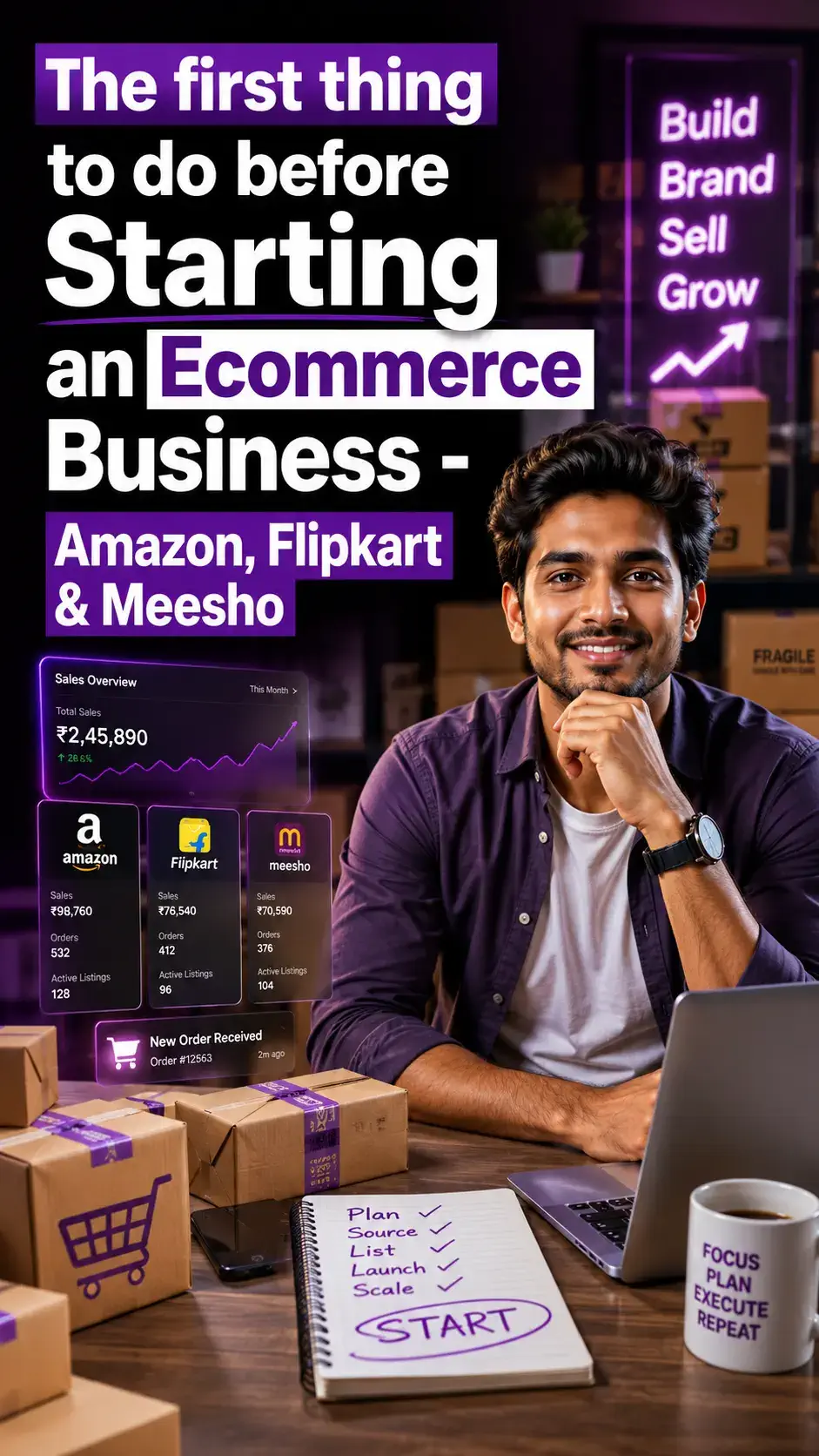
Yes. Marketplace management is one of our core ecommerce services, covering listing optimization, account health, sponsored ad campaigns and catalog management across Amazon, Flipkart and Meesho.
Ecommerce SEO can be run as a standalone service.
That said, we’ll usually flag it if your store has bigger issues elsewhere, like a broken checkout or missing marketplace presence, since ranking better won’t help much if the traffic can’t convert once it lands.
Every package is built around your store’s specific gaps rather than a fixed tier.
A brand strong on marketplace sales but invisible on Google needs a different mix than one with solid organic traffic but a weak checkout flow, so we scope accordingly after the initial audit.
We start with an audit of where your current traffic and sales are actually coming from, and where the gaps are.
A store with strong organic traffic but poor marketplace visibility needs a different starting point than one that’s ad-dependent with no SEO foundation, so the channel mix follows the data, not a default playbook.
Onboarding starts with a discovery call to understand your store, margins, and growth targets, followed by an audit of your current SEO, ads and marketplace presence.
From there we share a strategy and timeline before any campaign goes live, so you know exactly what we’re doing and why.
Not much, day-to-day. We handle execution across SEO, ads and marketplace management, and keep you looped in through regular check-ins and reporting.
We do need your input on product, pricing and inventory decisions that affect strategy, since those calls sit with you.
Ecommerce growth, especially SEO and marketplace ranking, takes time to compound, so we typically recommend a minimum engagement of 6 months to see the strategy actually play out rather than judging results too early.
Our pricing is structured around the scope of work involved, whether that’s SEO, ad management, marketplace management, or a combination.
We’ll walk you through the exact model on a call once we understand what your store needs.
Paid ads can show early signal within the first few weeks, since spend and data start flowing immediately.
SEO and marketplace ranking take longer, usually a few months, because they depend on algorithms building trust in your store over time rather than a switch you can flip.
We share performance updates on a weekly cadence, covering the metrics that actually connect to revenue, not just traffic or impressions. You’ll always know what’s working, what isn’t, and what we’re changing next.
We track CAC, ROAS, conversion rate, repeat purchase rate and revenue per channel, the numbers that show whether the store is actually making money, not just clicks, impressions or follower counts that look good on a slide but don’t move your bottom line.
We review what the data is actually saying and adjust the approach, whether that means shifting budget across channels, revisiting the offer, or fixing a conversion issue we missed earlier.
Ecommerce growth rarely follows a straight line, so we treat the first few months as a feedback loop, not a fixed bet.
45 minutes. No pitch. Just an honest look at where your marketing stands and where it should go.
You are just one step away from discovering how to improve your marketing.
Don't worry, we won't harrass you to retain our services
45 minutes. No pitch. Just an honest look at where your marketing stands and where it should go.

You are just one step away from discovering how to improve your marketing.
Don't worry, we won't harrass you to retain our services
45 minutes. No pitch. Just an honest look at where your marketing stands and where it should go.

You are just one step away from discovering how to improve your marketing.
Don't worry, we won't harrass you to retain our services
45 minutes. No pitch. Just an honest look at where your marketing stands and where it should go.
You are just one step away from discovering how to improve your marketing.
Don't worry, we won't harrass you to retain our services
45 minutes. No pitch. Just an honest look at where your marketing stands and where it should go.
You are just one step away from discovering how to improve your marketing.
Don't worry, we won't harrass you to retain our services